
–

17 MIN READ
Volunteer Fire Departments in Ontario: How They Work, How to Join, and What to Expect

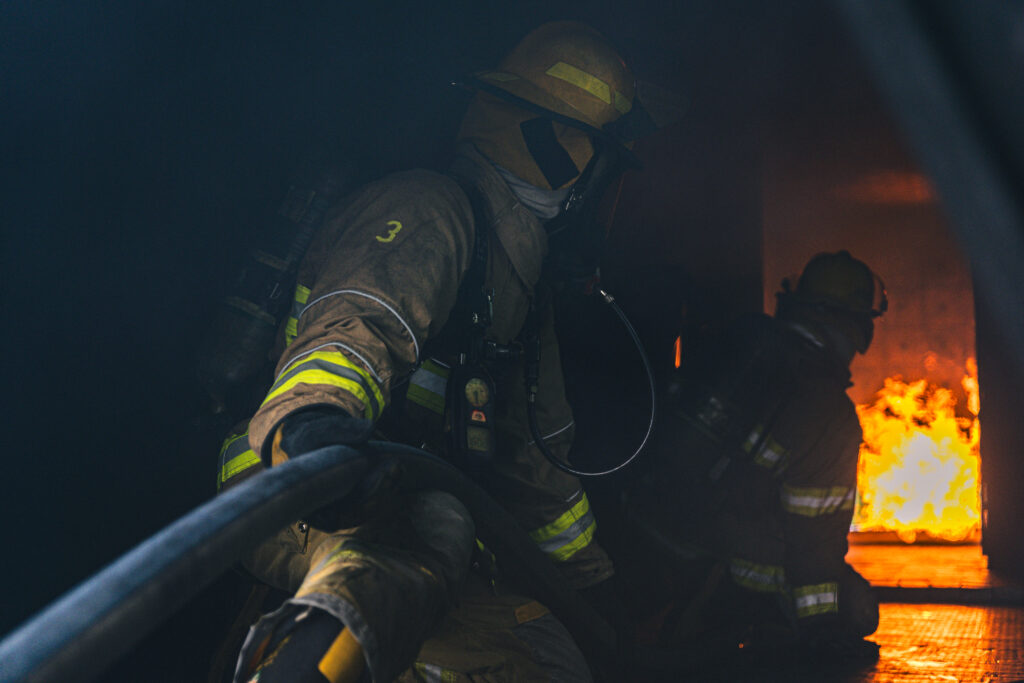
Thinking about serving your community as a volunteer (often “paid-on-call”) firefighter? You’re not alone; most fire departments in Ontario rely on volunteers to deliver frontline emergency response. This guide explains how volunteer fire departments operate, the difference between full volunteer and composite services, typical hiring requirements, what training looks like, time commitments, compensation basics, and how to get started.
Quick snapshot of Ontario’s fire service: Ontario has 437 fire departments: 32 career, 210 composite, and 195 volunteer. There are about 30,700 firefighters in the province – over 18,000 are volunteers.
1. How Volunteer Fire Departments Operate in Ontario
What “Volunteer” Means Under Ontario Law
In Ontario’s Fire Protection and Prevention Act (FPPA), a “volunteer firefighter” is someone who provides fire protection services either voluntarily or for a nominal consideration, honorarium, training or activity allowance. Put simply, some departments pay per call or per training, others provide an honorarium, and some are purely volunteer. The key is that you’re not a full-time, salaried firefighter.
Recent examples (to give you a feel for the market)
Volunteer vs. Composite Departments
- Volunteer department: The entire operational force is volunteer/paid-on-call.
- Composite department: A mix of full-time (career) and volunteer/paid-on-call members. Many Ontario communities use this model to maintain 24/7 coverage while managing cost and call volume. Municipal pages (e.g., Milton, Port Colborne, Kawartha Lakes) describe themselves as composite and explain how career and volunteer staff work together.
Response Model
Volunteer and composite departments typically alert members via pager/app. Volunteers respond from home or work to the station or directly to the scene, depending on local protocols. Availability expectations (e.g., percentage of calls, weeknight/weekend coverage) are set by each department’s policies.
Community Coverage
Departments set catchment/radius rules to ensure responders can arrive quickly – e.g., some require living or working within a set distance (often ~10–15 km) of a station. For example, Kawartha Lakes encourages applicants to live within 15 km of their closest station. Expect similar rules elsewhere.
2. Roles, Calls, and Time Commitment
What Volunteers Do
Volunteer firefighters perform fire suppression, medical first response (where provided), vehicle extrication, hazardous materials at the awareness/operations level, public education, pre-incident planning, and training. The full scope of services depends on your municipality.
Time Commitment
- Training nights: Typically one evening per week (2–3 hours), plus additional weekend sessions during recruit school.
- Calls: Unpredictable – days, nights, weekends, holidays. Departments may set minimum participation requirements to maintain “active” status (e.g., minimum % of calls or hours).
- Community events & prevention: Open houses, smoke alarm campaigns, station maintenance, etc.
3. Volunteer vs. Paid-on-Call vs. Part-Time: What’s the Difference?
Ontario departments use different terms. The FPPA definition above includes volunteer service with nominal compensation (e.g., per-call stipends or honoraria). Many municipalities describe members as paid-on-call (POC) and pay hourly for calls/training; others pay a flat allowance. Exact models vary by municipality; check the posting for details. (Municipal recruitment guides – e.g., Niagara Falls – outline typical duties, training and compensation structures.)
4. How to Become a Volunteer Firefighter: Hiring Requirements (Typical)
Each municipality sets its own hiring standard, but common requirements include:
- Age & status: 18+ and legally entitled to work in Canada. The Ontario Office of the Fire Marshal (OFM) routinely highlights these minimums.
- Driver’s licence: Valid Ontario Class G is common; some departments prefer or eventually require DZ (municipalities like Niagara Falls note DZ training/licensing within their information packages).
- Driver’s abstract: Clean record consistent with municipal policy.
- Police check: Criminal Record and Vulnerable Sector Check (level varies).
- Medical & physical fitness: Clearance by a physician and a fitness/physical ability test.
- First Aid/CPR: Standard First Aid with CPR/AED is common.
- Residency/response time: Live or work within the department’s catchment (e.g., within ~15 km or a set response-time window).
- Availability: Ability to attend training nights and respond to a reasonable share of calls.
Good to know: Some postings state “no previous fire certification required” for entry, because the department will train you to NFPA standards after hire. Others may give preference to candidates who already hold NFPA 1001 Level I/II and NFPA 1072 Awareness/Operations.
5. The Selection Process
While details vary, expect some combination of:
- Online application & résumé (note your proximity/availability).
- Pre-screen (driver’s abstract, minimum qualifications).
- Aptitude/physical ability testing (local variant or recognized fire-fitness tests).
- Interview(s) – assess teamwork, availability, community commitment.
- Medical & vision/hearing screening.
- Police background check.
- Conditional offer & recruit class.
Department recruitment pages outline their process and timelines each year; many communities, such as Kawartha Lakes, run intake classes annually or as needed.
6. Training & Certification (Ontario Context)
The Provincial Framework
In Ontario, firefighter training and certification align with the National Fire Protection Association (NFPA) standards, overseen by the Office of the Fire Marshal. Certification testing to IFSAT/ProBoard is available for standards such as NFPA 1001 Firefighter I & II (structural) and NFPA 1072 Hazardous Materials Awareness & Operations.
How a Recruit Class Typically Works
Department recruit school: After hire, you’ll complete a municipally run program covering theory, skills labs, and live-fire evolutions appropriate to your role, followed by certification testing where applicable.
Schedule: Often weeknight training plus occasional weekends for practical sessions, compressing more time-intensive modules into Saturdays/Sundays to fit volunteers’ schedules.
Certification goal: Many departments aim to take recruits to NFPA 1001 Level I/II and NFPA 1072 A/O (scope and timing vary by municipality).
7. Time, Pay, and Benefits (The Practical Stuff)
Time: Count on weekly training nights (2–3 hours), extra weekends during recruit school, and unpredictable calls throughout the year. Expect busier periods during severe weather or local events.
Compensation: Models range from per-call/per-hour pay to honoraria or training stipends. Exact amounts and structures are set locally; check the municipal posting or HR guide (e.g., Niagara Falls’ public recruitment guide).
Equipment/PPE: The department issues PPE and equipment (do not buy your own structural PPE).
Insurance & WSIB: As municipal responders, volunteers/POC members are typically covered for workplace injury; details are municipal/WSIB-specific.
Career pathing: Many volunteers pursue additional certifications (driver/operator, technical rescue, fire prevention/public education). Some later apply to career departments, while others remain as long-term volunteer leaders.
8. Full Volunteer vs. Composite: Which One Is Right for You?
Full Volunteer Department
- Pros: Strong community ties; flexible structure; tight-knit teams.
- Consider: Fewer daytime responders in commuter towns can mean heavier evening/weekend reliance. Training is scheduled to accommodate volunteers’ work/life.
Composite Department
- Pros: Station coverage supplemented by career staff improves daytime response; volunteers gain experience working alongside full-timers; broader call types.
- Consider: More formal scheduling and additional policies to coordinate career and volunteer operations. Expectations around minimum participation often apply. (Ontario municipalities, such as Milton, commonly use this model.)
9. Getting Started: Step-by-Step
- Confirm your catchment: Identify your nearest fire station and ensure you live/work within the required radius or can meet response-time rules. Check the municipal recruitment page for specifics (e.g., 15 km).
- Check the current posting: Municipal sites list minimums (age, licence, First Aid/CPR, availability, police check) and preferred assets (DZ, prior NFPA certs, trades experience, bilingualism).
- Prep your application: Highlight availability, proximity, community involvement, and teamwork.
- Build your fitness: Prepare for a physical ability test and medical assessment.
- Get First Aid/CPR: If not already certified, enroll now.
- Plan for training nights/weekends: Discuss expectations with your family/employer.
- Consider pre-service or bridging options: If you want a head start – or your department prefers candidates with NFPA – ask about SFA options that align with OFMEM certification pathways.
10. Frequently Asked Questions
Do volunteer firefighters get paid in Ontario?
It depends. The FPPA definition explicitly includes volunteers who receive nominal compensation (honoraria, per-call/training allowances). Many Ontario departments use a paid-on-call model. Always check your municipality’s posting for details.
Do I need NFPA 1001/1072 before applying?
Requirements vary. Some departments hire first and then train you to NFPA 1001/1072; others prefer candidates who already hold these certifications. Ontario’s certification system is overseen by the OFM.
What is the time commitment?
Plan for weekly training, extra weekend practicals during recruit school, and unpredictable calls. Departments may set minimum participation thresholds.
Can I apply if I work shifts or commute?
Yes – many volunteers juggle work with service. What matters is whether you can meet your department’s availability and response-time expectations (and live/work inside the catchment).
Is there a path to a full-time career?
Volunteer firefighting builds experience, training, and references. Some volunteers later pursue career roles; many remain and advance as volunteer officers.
11. How Southwest Fire Academy Supports Volunteer & Composite Departments
Southwest Fire Academy has teamed up with many volunteer and composite departments across Ontario to train their new recruits. Our blended model – independent online theory + scheduled practical weekends – is built for paid-on-call realities and aligns with OFMEM NFPA certification pathways. Departments can onboard new members without sacrificing coverage, and recruits can gain the hands-on skills and certification readiness they need to serve safely.
Beyond foundational training, we offer specialized continuing education to keep your department sharp. Many composite stations desperately need responders capable of driving the apparatus safely, making our NFPA 1002 Pump Operations course an immediate asset. Once you are established on the department, enrolling in advanced practical training like our Hazardous Materials Awareness and Operations program proves your commitment to tactical safety on the fireground.
12. Key References (Ontario)
Ontario Office of the Fire Marshal (OFM): Overview; training/certification to NFPA standards.
Ontario Association of Fire Chiefs (OAFC): Provincial stats on departments and personnel.
FPPA – Definition of “Volunteer Firefighter”: Legal basis for volunteer/nominal compensation.
Municipal examples: Composite/POC models and catchment distance (Milton, Port Colborne, Kawartha Lakes), and a sample volunteer recruitment guide (Niagara Falls).
13. How to Stand Out During Municipal Recruitment
Ontario municipalities constantly update their recruitment cycles to manage turnover in rural and growing suburban areas. Over 18,000 firefighters in the province are volunteers. These departments remain the absolute backbone of local safety. Success in this field requires more than just living within a 15 km radius of a station. It demands aggressive commitment to continuous education. Many departments now look for candidates who proactively seek out NFPA 1001 and 1072 certifications through blended learning models. These programs allow you to manage theory online while attending practical weekends. This approach fits the life of a paid-on-call professional perfectly. It ensures you meet strict provincial standards set by the Office of the Fire Marshal. Focus on physical readiness. Obtain a DZ licence early. You will immediately position yourself as a top-tier applicant. Local councils value responders who balance a full-time career with unpredictable emergency calls. Staying informed about shifting municipal requirements guarantees your application gets noticed during the next intake.
Apply early – intakes can be competitive and infrequent.
Train smart – cardio, strength, and movement quality all matter for firefighter tasks.
Communicate – be upfront about your availability and distance to station(s).
Invest in learning – ask your department or SFA about NFPA-aligned training plans that fit a volunteer schedule.